Combi vs System Boiler: Which Is Right for Your London Home?
Replacing a boiler is one of the biggest decisions in any renovation, and the first question is almost always the same: combi or system? Pick well and you get steady hot water, low bills and a boiler that suits the way you live. Pick badly and you end up with weak showers, a cupboard full of tanks you do not need, or a heating system that struggles every January.
This guide compares the two most common gas boiler types in UK homes. It explains how each one works, where each one shines and which situations call for something different. By the end you should know which type fits your property and what to ask before you accept a quote.
How a combi boiler works
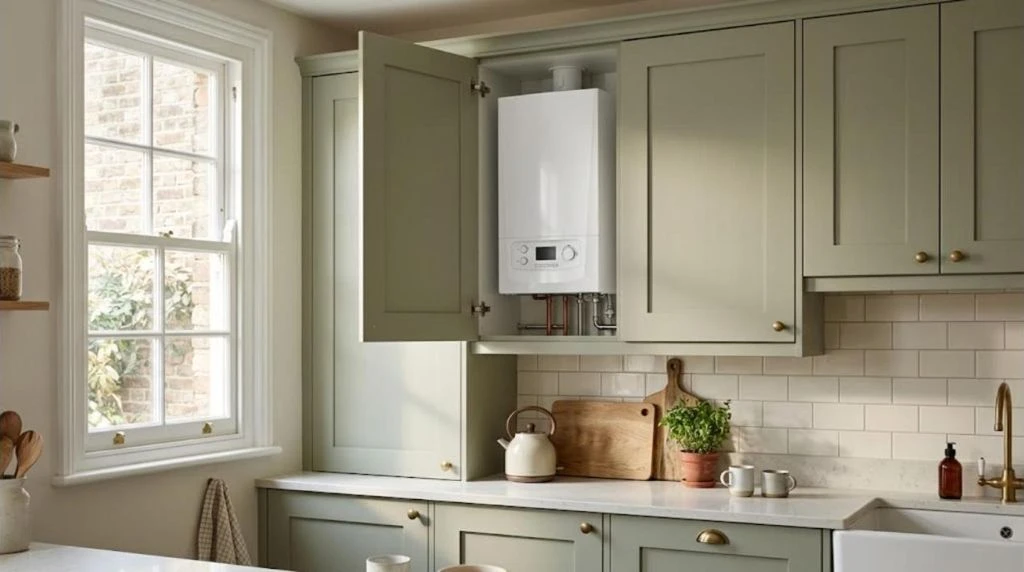
A combination (combi) boiler heats your central heating and your hot water in a single unit. When you open a hot tap, the boiler fires up and heats water straight from the mains. There is no hot water cylinder and no cold water tank in the loft.
That design brings clear benefits:
- Space saving. No cylinder cupboard and no loft tanks, which frees up room in a flat or a terrace.
- Hot water on demand. It never runs out because the water is heated as you use it.
- Simpler installation. Fewer components usually means a quicker, tidier job.
- Lower running waste. You are not keeping a tank of water warm all day.
The limit is flow. A combi can only heat so much water at once, and it relies on your mains supply. Run a shower and a kitchen tap together and the flow to each can drop. In a home with one bathroom this rarely matters. In a busy family house it often does.
How a system boiler works
A system boiler also heats the radiators directly, but it stores hot water in a separate cylinder. Most of the heating components, such as the pump and expansion vessel, are built into the boiler. You still get rid of the cold water tank in the loft, but you keep the hot water cylinder.
The advantages are the mirror image of a combi’s:
- Strong flow to several outlets. Two bathrooms can run at once without a noticeable drop.
- Good with high demand. The cylinder holds a reserve, so a long morning queue for the bathroom is not a problem.
- Works with solar thermal and other renewables. Cylinders are easier to pair with future upgrades.
- Reliable where mains pressure is modest. Stored hot water is delivered at the pressure of your cold supply and pump.
The trade-off is space. You need somewhere for the cylinder, and once it is empty you wait for it to reheat.
Combi vs system boiler at a glance
| Question | Combi boiler | System boiler |
|---|---|---|
| Hot water | On demand, from the mains | Stored in a cylinder |
| Space needed | Minimal | Cylinder cupboard required |
| Best for | 1 to 2 bathrooms, flats, smaller homes | 2 or more bathrooms, larger households |
| Several taps at once | Flow can drop | Handles it well |
| Running out of hot water | Never | Possible if the tank is used up |
| Installation | Usually simpler | A little more involved |
| Needs good mains pressure | Yes | Less so |
Which one suits your property?
Choose a combi if you live in a flat or small house, have one bathroom (or two with light use), and want to reclaim cupboard space. Most London conversions and terraces fall into this group, which is why combis are so common across the capital.
Choose a system boiler if you have two or more bathrooms, a larger household that showers at the same time, or plans for a loft conversion or extension that adds more outlets. If your mains pressure is weak, a cylinder is usually the safer bet.
Think again if your home has a very old, low-pressure plumbing layout, or you already own a cylinder in good condition. In that case a system boiler can reuse what you have and keep costs sensible.
Check these three things before you decide
1. Mains water flow and pressure. A combi needs a healthy supply. As a rule of thumb, engineers like to see a good flow rate and at least around 1 bar of pressure at the boiler. Your installer can test it in minutes, and the result often settles the question.
2. How many people use hot water at once. Count peak moments, not the number of bedrooms. Two showers at 7.30am is a very different load from one shower and a dishwasher.
3. Where the boiler will go. Position affects the flue route, the pipework and the final price. A boiler that moves from the kitchen to the loft needs more work than a like-for-like swap.
What the rules say
Gas boilers in England must meet efficiency standards, and since 2018 the government’s Boiler Plus requirements have applied to new installations. In short, a new gas boiler needs a minimum efficiency of 92% and must be fitted with time and temperature controls. A combi must also include an additional energy-saving measure, such as weather compensation, load compensation, flue gas heat recovery or smart controls with automation and optimisation.
The practical effect is simple. A modern boiler, whichever type you choose, should use noticeably less gas than an older non-condensing unit. Ask your installer which of the extra measures they plan to fit and why.
Running costs and lifespan
Neither type is automatically cheaper to run. A well-sized combi in a small home wastes little energy because it never heats a tank. A system boiler in a large home can be more efficient overall because it matches the way the household uses water. What really drives your bills is how well the boiler is sized, how well the home is insulated and how well the controls are set.
Most modern boilers last 10 to 15 years if serviced annually. Warranties vary by manufacturer and are often longer when the installation is done by an approved installer and the boiler is registered on time. Keep your paperwork, because it matters when you claim.
Common mistakes to avoid
- Buying on output alone. A bigger boiler is not a better boiler. Oversizing wastes fuel and cycles on and off, which wears parts.
- Ignoring the existing pipework. Old, corroded or undersized pipes can cause noise, cold spots and early failure.
- Skipping a system flush. Sludge in old radiators damages a new boiler. A power flush or a magnetic filter protects your investment.
- Choosing the cheapest quote without checking registration. Gas work must be done by a Gas Safe registered engineer. Ask to see the ID card and check the register.
Who should fit it
Installation matters as much as the model you pick. A good engineer will survey the property, test the water supply, talk through your hot water habits and put the plan in writing. Homeowners in the capital who want a straightforward fixed-price fit can look at oliasplumbingandheating.co.uk, where combination boiler installation by Olia’s Plumbing and Heating covers Central, West and South West London, including Kensington, Chelsea, Chiswick, Richmond, Hammersmith and Notting Hill.
Whichever company you choose, ask for a written quote that names the exact boiler, the controls, the flue and the warranty length.
Frequently asked questions
Is a combi boiler better than a system boiler? Neither is better in every home. A combi suits smaller properties with one or two bathrooms. A system boiler suits larger households with higher hot water demand.
Can I swap a system boiler for a combi? Often yes, but it depends on your mains water supply. Removing the cylinder frees space, though the pipework may need changes. A survey will confirm it.
Do I still need a loft tank with a system boiler? No. System boilers work from the mains and use a sealed heating circuit, so the cold water tank in the loft is no longer required.
How long does installation take? A like-for-like swap is usually a day or two. Moving the boiler or removing a cylinder takes longer.
What should I do first? Check your water flow, count your bathrooms and get a survey. Those three steps answer most of the combi vs system question before you spend anything.
The short answer
If your home is small to medium with one or two bathrooms, a combi will almost certainly give you the best mix of space, comfort and simplicity. If you have a bigger household or more bathrooms, a system boiler is the safer way to avoid weak showers. Whatever you choose, pick a Gas Safe registered installer, insist on modern controls and keep the boiler serviced every year.