Waterproofing Stadium Concourses, Seating Bowls and Roof Gutters with Spray-Applied Membranes
Stadiums take a beating that few other buildings face. Thousands of feet cross the concourses on match days, rain sits on terraces between fixtures, and roof gutters carry huge volumes of water off structures that were often designed decades ago. When water finds a way through, the damage rarely stays where it starts. It corrodes reinforcement, stains hospitality suites below and turns a minor defect into a closure.
For venue owners and estates teams, spray- applied membranes have become a common answer. Here is what is worth understanding before commissioning the work.
Why seamless matters on a stadium
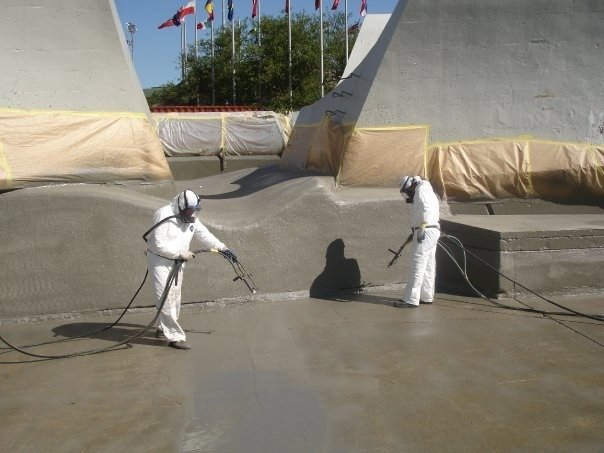
Traditional sheet membranes and bitumen systems rely on laps, welds and adhesives. Each joint is a potential leak path, and a stadium contains a remarkable number of awkward details: stair nosings, handrail fixings, drainage outlets, seat brackets and movement joints between precast units. A spray-applied membrane cures into a continuous skin that follows these shapes without seams. It can be built up thicker at vulnerable points and carried up upstands and into outlets, so the waterproofing and the detail become one layer.
Many of these systems are based on polyurethane or polyurea chemistry. Polyurea in particular is known for curing very quickly, often becoming touch-dry within minutes, and for its elasticity, which helps it bridge hairline cracks as the structure expands and contracts with the seasons.
Concourses and seating bowls
Concourses are effectively podium decks with heavy foot traffic, food spillages, cleaning chemicals and the occasional service vehicle. Seating bowls add another layer of complexity, because precast terrace units move independently and the joints between them are where leaks most often appear. A good specification treats these joints as engineered details rather than simply spraying over them, with a compatible sealant or reinforcing strip beneath the membrane.
Slip resistance is essential. Trafficked areas usually receive a broadcast of aggregate into the wearing coat, and the level of grip should be agreed with whoever is responsible for spectator safety, particularly on stepped gangways that get wet. Where the finish is exposed to sunlight, ask whether the system includes a UV-stable topcoat; some base membranes can chalk or change colour over time without one.
Roof gutters and drainage
Box gutters on stadium roofs are notorious. They are long, hard to reach and often hidden from view until water appears inside. Lining them with a sprayed membrane can extend their life considerably, provided outlets, stop ends and joints in the gutter sole are properly detailed. Because access usually involves working at height, it pays to programme gutter work alongside other roof maintenance so that scaffolding or powered access is mobilised once.
Surface preparation decides the outcome
Most failures of liquid-applied systems trace back to preparation rather than the product. Concrete needs to be sound, clean and dry enough for the chosen primer, with laitance, old coatings and contamination removed, typically by shot blasting or diamond grinding. Metal gutters need corrosion and mill scale dealt with before priming. Moisture readings, air temperature and dew point should be recorded on every shift, because British weather can turn an acceptable surface into an unsuitable one within an hour.
Fast return to service
The main operational benefit is time. Rapid cure means sections can often be reopened within hours rather than days, which allows phased work between fixtures, concerts and the close season. Specialist contractors offering polyurea stadium waterproofing typically plan the programme block by block, so parts of the ground stay usable while others are treated.
Inspection and aftercare
Insist on documented quality control: film thickness checks, adhesion tests on trial areas and flood testing of gutters where practical. Once the work is handed over, build the membrane into the planned maintenance regime. A short visual inspection after each season, focusing on joints, outlets and high-wear routes, will catch small issues before they reach the spaces below.
Final thoughts
Spray-applied membranes are not a shortcut, but on a stadium they solve problems that conventional systems struggle with. Careful preparation, properly detailed joints and a realistic inspection plan are what turn a fast application into a durable one.