
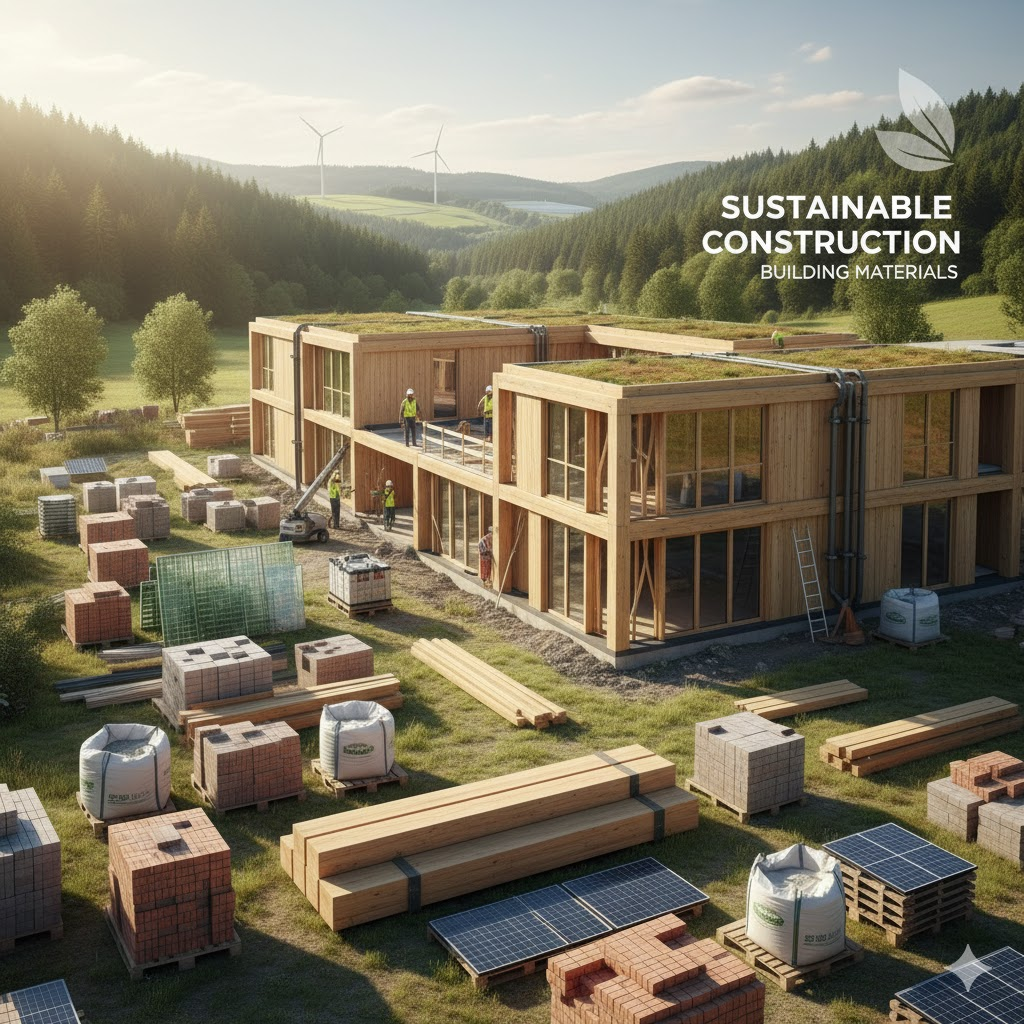
The Role of Building Materials in Sustainable Construction
The creation enterprise stands in the middle of world efforts to create an extra sustainable future. Buildings account for almost forty% of worldwide carbon emissions, and a considerable portion of that effect comes from the materials used in their creation. As cities keep on increasing, the demand for more sustainable, useful resource-green, and occasional-carbon constructing solutions is more than ever.
Building substances play a defining function in shaping the environmental footprint, performance, and durability of contemporary structures. From reducing embodied carbon to enhancing electricity efficiency, the proper cloth selections can transform how we layout, construct, and operate homes. This article explores how constructing materials make contributions to sustainable production, what criteria outline their sustainability, and the way the enterprise can circulate toward a more round and responsible future.
Why Building Materials Matter in Sustainable Construction
Sustainability in creation begins with material selection. Every stage of a constructor’s lifestyles from raw fabric extraction and manufacturing to transportation, installation, and eventual disposal leaves a measurable environmental impact.
Embodied Carbon and Resource Impact
Embodied carbon refers back to the greenhouse gasoline emissions associated with producing and transporting constructing materials. Concrete, steel, glass, and aluminum are among the largest members to embodied carbon because of their energy-in depth production strategies. By deciding on low-carbon options or materials with recycled content material, developers can substantially lessen the general footprint of an undertaking before it even starts off as an evolved operation.
Beyond Environmental Benefits
Sustainable materials no longer simplest shield the planet, they also improve venture economics and occupant properly-being. Long-lasting materials require fewer replacements, decreasing preservation fees over time. Similarly, the usage of low-VOC paints, adhesives, and finishes enhances indoor air excellent and occupant fitness, assisting the social element of sustainability.
In essence, the sustainability of a construction is essentially decided via the sustainability of its materials.
Key Criteria for Sustainable Building Materials
When comparing whether or not a fabric is sustainable, several key factors come into play:
a) Embodied Energy and Carbon
A simply sustainable fabric must minimize both strength consumption and carbon emissions for the duration of its production. For example, low-carbon concrete, bamboo, and go-laminated wood (CLT) offer high power with decreased environmental effect as compared to conventional metallic and cement.
b) Durability and Lifespan
Materials that withstand put on, corrosion, and environmental damage assist reduce the frequency of maintenance and replacements. Longer lifespans imply fewer sources are eaten up over the years and regularly-left out elements of sustainability.
c) Recyclability and Circular Economy
Construction waste is a prime environmental difficulty. Choosing materials that can be reused, recycled, or without problems dismantled at the cease of a building’s lifestyles supports the round financial system. Recycled concrete aggregates, reclaimed wooden, and modular additives are top examples.
d) Local Sourcing
Transporting substances throughout lengthy distances adds to carbon emissions. Locally sourced substances now not best lessen transportation impact but also assist neighborhood economies. Partnering with close by, respectable providers ensures higher best control and timely availability of materials.
e) Health and Indoor Quality
Materials with low or zero unstable organic compounds (VOCs) are critical for retaining healthful indoor environments. Natural insulation, water-primarily based paints, and non-toxic finishes are more and more favored in sustainable creation.
f) Certification and Standards
Certifications consisting of LEED, BREEAM, or Environmental Product Declarations (EPDs) help specialists perceive and confirm sustainable materials. These requirements ensure transparency and promote the adoption of greener products across the industry.
Traditional vs Sustainable Materials
A meaningful transition toward sustainable construction requires a rethinking of conventional material choices.
| Category | Traditional Materials | Sustainable Alternatives |
| Structural | Reinforced concrete, steel | Low-carbon concrete, Cross-Laminated Timber (CLT), recycled steel |
| Insulation | Synthetic foam, fiberglass | Hemp, sheep wool, cellulose fiber, recycled cotton |
| Finishes | Solvent-based paints, PVC flooring | Low-VOC paints, natural plasters, bamboo flooring |
| Roofing | Asphalt shingles, metal sheets | Green roofs, recycled rubber tiles, cool roofing materials |
| Façades | Aluminum, glass | Composite cladding with recycled content, reclaimed timber panels |
Each substitution no longer best reduces environmental impact however additionally complements performance and aesthetic versatility.
When choosing suppliers for these substances, it’s also important to prioritize the ones committed to sustainable sourcing and production. For example, participating with trusted building materials suppliers in Dubai can help ensure admission to responsibly sourced, durable, and locally to be had products. This reduces transportation-related emissions whilst assisting sustainable construction deliver chains
Challenges in Adopting Sustainable Materials
Despite growing awareness, numerous challenges nevertheless avoid the significant adoption of sustainable materials in construction.
Cost and Perception
Sustainable substances are often perceived as luxurious, even though their lengthy-term financial savings (via durability and strength efficiency) often outweigh the premature investment. Educating stakeholders about lifecycle costing is prime to overcoming this barrier.
Limited Availability
In some regions, getting admission to licensed green substances remains restricted. This shortage can result in supply chain delays or project compromises. Developing regional manufacturing hubs and strengthening dealer networks can assist deal with this hole.
Knowledge and Training
Contractors and architects may also lack familiarity with more recent substances or their set up techniques. Continuous professional training and exposure to pilot tasks are critical for a successful integration.
Measurement and Verification
Accurately assessing embodied carbon and lifecycle impact requires strong facts and standardized metrics areas wherein the industry nonetheless has room to grow. Greater transparency and mandatory reporting ought to assist accelerate development.
Best Practices for Sustainable Material Selection
Transitioning to sustainable construction practices requires a systematic method that involves all stakeholders from architects and engineers to providers and clients.
For Architects and Designers
- Integrate sustainability dreams all through the early layout tiers.
- Prioritize substances with Environmental Product Declarations (EPDs).
- Optimize constructing orientation, insulation, and envelope design to reduce cloth waste.
For Contractors and Builders
- Source from certified neighborhood providers to reduce emissions.
- Maintain a material reuse and recycling plan on-web site.
- Document and verify all sustainable material makes use of for mission certification.
For Developers and Owners
- Look past initial prices and compare lifecycle overall performance.
- Encourage the usage of neighborhood, recyclable, and occasional-carbon products in tenders.
- Request regular sustainability reporting from contractors and suppliers.
A collaborative method guarantees that sustainability is embedded in each level from cloth sourcing to task crowning glory.
Emerging Trends and Innovations
Innovation continues to redefine the future of sustainable production substances.
Bio-Based Materials
Products like hempcrete, mycelium-based composites, and bio-resins are making their manner into mainstream production. These materials are renewable, biodegradable, and provide fantastic thermal overall performance.
3D Printing and Material Efficiency
Additive manufacturing allows for optimized designs that use a lousy lot less material without compromising electricity, reducing waste at some point of advent.
Recycled and Upcycled Materials
Recycled glass, plastic bricks, and reclaimed wood are gaining reputation as sustainable options that limit landfill waste.
Digital Material Passports
Digital tracking of materials thru BIM (Building Information Modelling) systems ensures accountability, allowing simpler recycling and reuse at the stop of a constructing’s lifestyles.
Government Regulations
Many countries, inclusive of the United Kingdom and UAE, are introducing carbon reporting requirements for creation tasks. This will similarly pressure the demand for low-carbon materials and greener delivery chains.
Conclusion
The role of building materials in sustainable construction extends far beyond aesthetics or structure, it defines how buildings perform environmentally, socially, and economically. Sustainable materials reduce carbon emissions, improve efficiency, and support the long-term resilience of our built environment.
To achieve net-zero goals, the construction industry must prioritize material innovation, responsible sourcing, and circular economy principles. By collaborating with credible suppliers and embracing greener alternatives, builders and developers can create structures that stand the test of time both in performance and sustainability.
Sustainable construction is not a future goal; it’s a present necessity. Every material choice we make today shapes the environmental legacy of tomorrow.