The Best Tiny Home Communities in the UK
The growth of tiny home communities is no longer a passing trend. From a construction standpoint, these developments represent a shift toward efficient land use, sustainable building methods, and smarter infrastructure planning. As property prices continue to rise and planning constraints tighten, tiny home communities in the UK are becoming a realistic housing alternative rather than an experimental idea.
From my professional experience in construction, delivering successful tiny home communities requires more than placing compact dwellings on a plot of land. These developments must meet structural standards, comply with planning policies, integrate drainage and utilities, and ensure long-term durability. The most successful tiny home communities are those designed as permanent residential environments from the outset.
Planning Permission and Regulatory Framework
One of the biggest challenges when developing tiny home communities is navigating the planning system. Unlike some countries where small dwellings can be freely positioned on private land, the UK requires proper planning approval for change of land use and residential development.
Whether homes are built on permanent foundations or chassis systems, local authorities typically assess them under full residential standards if they are intended for full-time occupation. This means compliance with Building Regulations, including structural safety, fire protection, insulation performance, drainage, and accessibility.
For professionally developed tiny home communities this involves soil investigations, foundation design calculations, and detailed service drawings before construction even begins. Ignoring these steps often leads to enforcement action or long-term structural problems.
Lammas Eco Village, Pembroke Shire
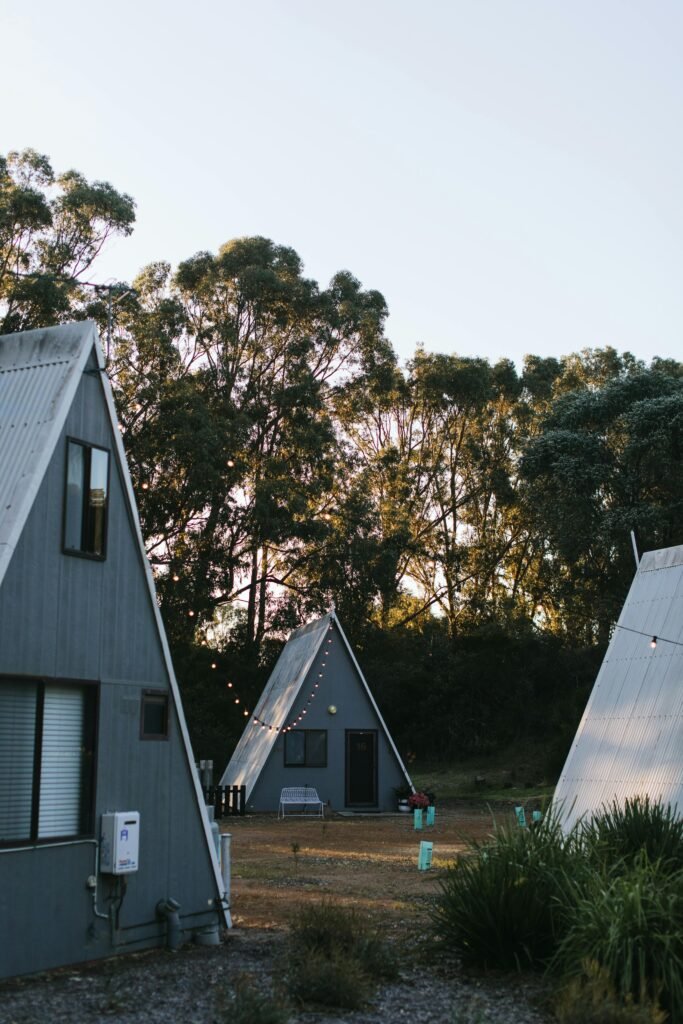
Lammas Eco Village is widely recognized as one of the most successful low-impact housing developments in Britain. While not exclusively a tiny house estate, it demonstrates how well-planned tiny home communities can gain official approval when sustainability and land management are integrated into the proposal.
From a construction perspective, the homes are primarily timber-framed structures using natural insulation materials such as straw bale and sheep’s wool. Foundations are carefully designed to reduce environmental impact while maintaining structural stability. Drainage systems incorporate ecological wastewater treatment, and renewable energy systems are integrated during the design stage. What sets this development apart is that it treats compact housing as a permanent solution, not a temporary workaround.
Tinkers Bubble, Somerset
Tinkers Bubble provides another example of small-scale settlement design. Located within managed woodland, this site shows how tiny home communities must adapt construction techniques to environmental constraints.
Transport access is limited, so lightweight timber construction is preferred. Foundations are designed to minimize disruption to tree roots and natural drainage patterns. Off-grid infrastructure is carefully engineered, with solar arrays and composting systems installed to meet environmental standards.
While off-grid setups reduce reliance on public utilities, they require careful planning to maintain safety and sanitation compliance. This technical balance is essential in rural tiny home communities in the UK.
Ashley Vale, Bristol
Ashley Vale represents a more urban model of compact, community-led housing. In city environments, tiny home communities must meet stricter fire separation rules, acoustic standards, and utility connection requirements.
Homes in this area typically use engineered timber frames with reinforced concrete slab foundations connected to mains drainage and electricity. Insulation performance is designed to meet Part L energy standards, and structural detailing ensures long-term durability. Urban projects highlight that tiny home communities in the UK can function within city boundaries when properly engineered and approved.
Bridport Cohousing, Dorset
Bridport Cohousing demonstrates how smaller footprint homes can be integrated into a professionally planned residential scheme. Although not exclusively tiny houses on wheels, many units are compact and energy-efficient.
The development includes engineered access roads, compliant drainage systems, and shared renewable energy infrastructure. Modern timber frame systems with high airtightness standards ensure thermal efficiency. Projects like this illustrate that tiny home communities can combine small-scale living with professional construction quality.
Infrastructure and Groundworks
A common misconception is that smaller homes require minimal groundwork. In reality, infrastructure demands in tiny home communities are nearly identical to conventional housing developments. Proper excavation, sub-base preparation, and drainage installation are essential. Foul water systems must meet environmental regulations, whether connected to mains sewers or private treatment plants. Surface water drainage must prevent flooding and soil erosion.
Electrical systems often require underground armored cabling. Water supply lines must be insulated against frost. Fire access routes must be maintained even if homes are compact and closely arranged. In professionally delivered tiny home communities in the UK, these services are engineered before the first dwelling is placed on site.
Structural Integrity and Build Quality
Durability is critical. The long-term success of tiny home communities depends on build quality rather than novelty. Timber frame construction dominates due to speed and sustainability, but it must include proper vapor control layers, breather membranes, and ventilation systems to prevent condensation and structural decay.
Roof pitch, flashing details, and wind load resistance are particularly important in exposed rural areas. Even small units must withstand UK weather conditions. Developers who cut corners on structural calculations often face costly remedial work later.
The Future of Tiny Home Communities in the UK
Looking ahead, the demand for tiny home communities is likely to increase as sustainability targets tighten and buyers seek affordable alternatives. Advances in modular construction, off-site manufacturing, and energy-efficient materials will further support this growth.
However, the developments that succeed will be those that approach construction professionally. Proper planning approval, engineered foundations, compliant drainage, and high-performance insulation will determine which tiny home communities in the UK remain viable long term.
Tiny homes may be compact, but constructing successful communities around them requires full-scale construction expertise. When designed and delivered correctly, tiny home communities in the UK can provide durable, efficient, and regulation-compliant housing solutions for the future.