5G Site Power with Battery and Solar Coordination at Scale
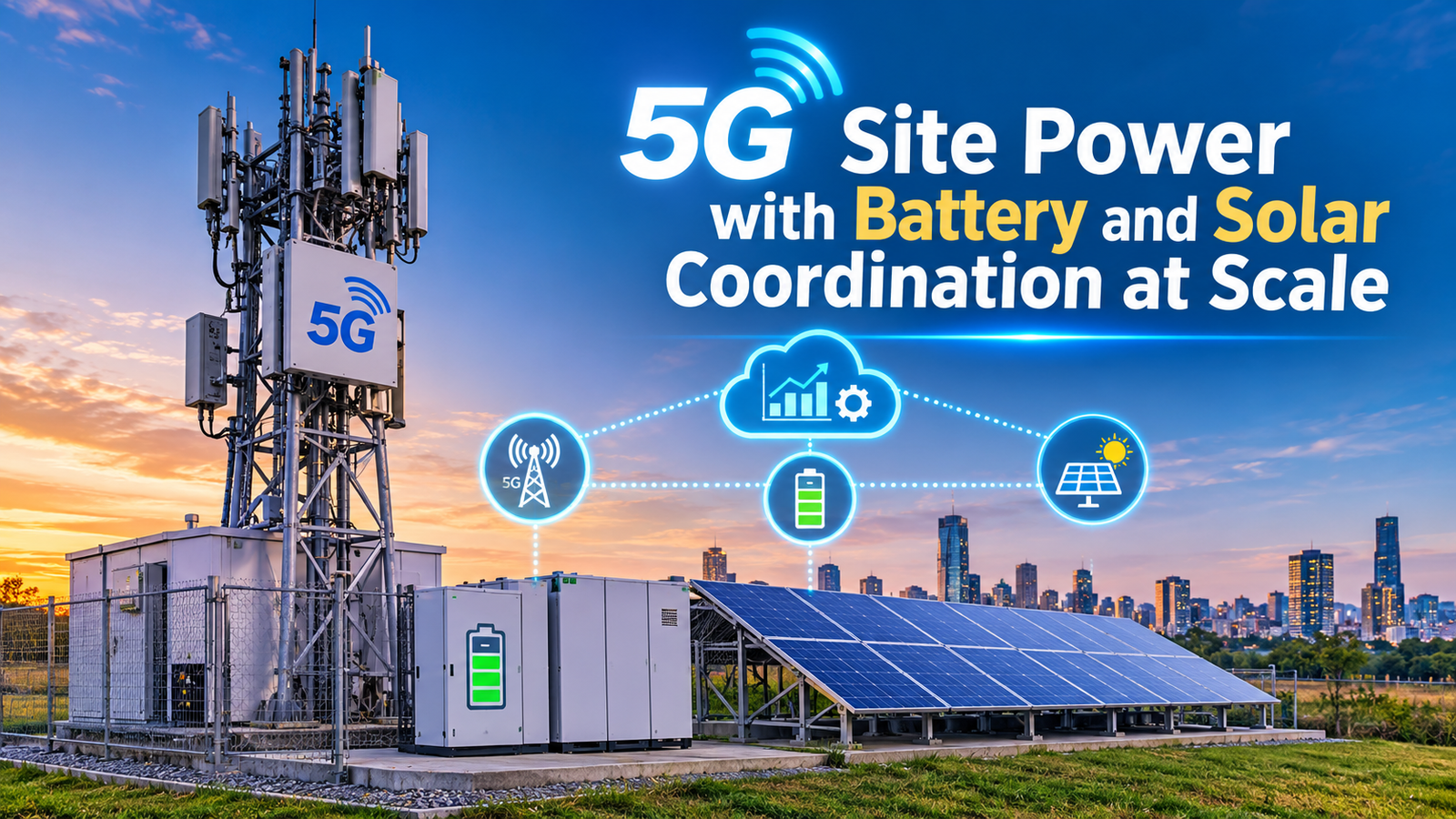
The power design for a distributed 5G site must support continuous network operation despite outdoor temperature and utility fluctuations. For 5G site power, system interfaces shape the real outcome. Huawei Digital Power describes simplified site deployment, CloudLi battery systems, AI-powered green site coordination, and intelligent site management. Together these address DC power availability, energy integration, and remote operation at distributed communications facilities, including 5G upgrades.
Map the electrical needs of the radio site
A typical telecom site uses utility input, rectification, DC distribution, backup batteries, and protected feeds to communication equipment. Huawei site power solutions are intended to coordinate parts of this infrastructure across different deployment formats.
Power planning should list radios, baseband equipment, transport devices, fans, and other site loads. Both peak demand and lower-traffic periods matter to rectifier efficiency and backup calculations.
Integrate batteries and renewable power
CloudLi forms part of Huawei site energy solutions and provides lithium battery capabilities for backup and coordinated energy use. Reserve energy must be protected for service continuity even when a wider energy-management strategy is enabled.
Photovoltaic generation can contribute to daytime demand, but output changes with solar conditions. Rectifiers, batteries, and controllers must keep the DC supply within acceptable limits when solar power falls.
Where grid supply is unreliable, autonomy and restoration behavior have priority over routine energy shifting. Battery size needs to account for outage duration, aging, temperature, and actual usable capacity.

Simplify equipment placement and service
Huawei describes simplified deployment from equipment room to cabinet and pole configurations. This approach can reduce space requirements at constrained sites, though structural suitability and maintenance access remain site-specific.
Compact site designs should still leave safe room to replace rectifier modules, access batteries, and isolate power feeds. Difficult access can extend a small repair into a lengthy service interruption.
For solar or battery integration, controllers need a priority order between the radio load, battery reserve, and energy optimization. Power continuity must remain defined for poor weather and a sudden grid interruption.
Monitor operating conditions across the network
Huawei intelligent site management focuses on remote visibility, control, and optimization of distributed assets. Energy readings and alarm records can help maintenance teams identify sites that warrant inspection.
Site reporting needs consistent labels and configuration records so that a fault can be located precisely. Incorrect asset mapping can waste technician visits across a large network.
Network availability requires safe local protection even if the management link fails. Central supervision should support diagnostics without becoming a dependency for essential DC power delivery.
5G site power planning connects radio demand with rectifiers, battery reserve, deployment format, and energy controls. The practical benefit of a coordinated site portfolio lies in sizing each part correctly and keeping the distributed network maintainable. For 5G site power, Any claimed benefit should be assessed under realistic loads, environmental conditions, and the local operating policy.