
How Landscaping in London Is Evolving Alongside Modern Construction
As urban development continues to reshape the capital, landscaping in London has moved well beyond the traditional notion of planting a few shrubs and laying turf. Today, it sits at the intersection of construction, urban planning, and environmental design — and contractors, developers, and homeowners alike are paying closer attention.
Landscaping as Part of the Build, Not an Afterthought
One of the biggest shifts in recent years is the integration of landscaping into the construction process from day one. Developers working on residential schemes across London — from infill projects in Hackney to large-scale regeneration sites in Croydon — are now factoring in green infrastructure at the planning stage rather than treating it as a finishing touch.
This matters for several reasons. Green spaces can influence planning approval, contribute to biodiversity net gain requirements under the Environment Act 2021, and directly affect a property’s kerb appeal and market value.
The Demand Drivers Behind London’s Landscaping Boom
Several trends are fuelling growth in landscaping demand across London:
- Urban heat island mitigation — Green roofs, living walls, and tree planting schemes are being specified more frequently on commercial builds to reduce surface temperatures.
- SUDS compliance — Sustainable urban drainage systems often rely on landscaping elements such as rain gardens and permeable planting beds, especially on sites where hard surfacing is extensive.
- Outdoor living space — Post-pandemic demand has driven a surge in garden design and high-specification terracing on residential projects.
Challenges Specific to London
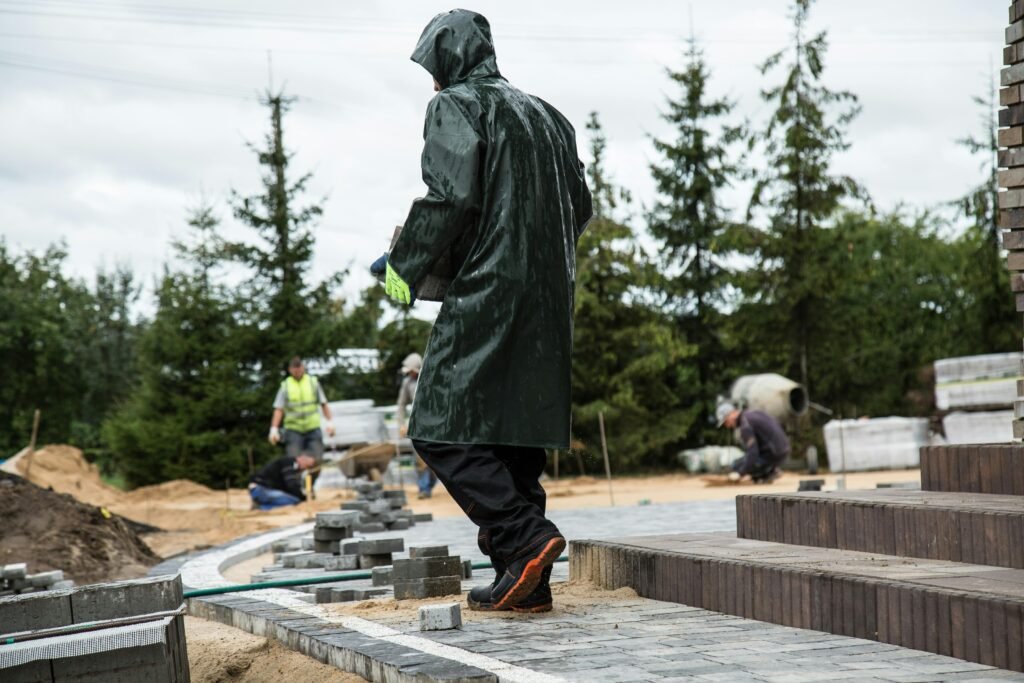
Landscaping in London comes with a unique set of constraints that professionals in other regions don’t always face. Access is often restricted, especially in dense inner-city boroughs. Soil quality beneath urban sites can be poor or contaminated, requiring remediation before planting. And planning restrictions in conservation areas or near listed buildings can limit the scope of works significantly.
For contractors, this means landscaping subcontractors need to be familiar not just with horticulture, but with London-specific planning frameworks and coordination with the principal contractor’s programme.
Choosing the Right Landscaping Contractor in London
Whether you’re a developer, main contractor, or private client, choosing the right landscaping partner in London is critical. Look for firms with demonstrable experience on urban projects, an understanding of local authority requirements, and the ability to work within the logistical constraints of a London build environment.
Accreditations from the Association of Professional Landscapers (APL) or the British Association of Landscape Industries (BALI) are useful indicators of quality and professionalism.
Final Thoughts
Landscaping London projects of all scales — from rooftop gardens on commercial towers to compact rear gardens on terraced houses — require a level of expertise and coordination that reflects the complexity of the capital itself. As the construction industry continues to priorities sustainability and placemaking, expect landscaping to take an ever more prominent role in how London’s built environment is shaped.