Solid Shower Panels: A Practical Alternative to Traditional Tiling in Bathroom Refurbishments
Solid Shower Panels: A Practical Alternative to Traditional Tiling in Bathroom Refurbishments
Bathroom refurbishment projects often involve balancing three important factors: appearance, installation time and long-term maintenance. Traditional ceramic and porcelain tiles remain popular, but they are no longer the only practical option for creating an attractive shower enclosure.
Solid shower panels have become an increasingly popular alternative, particularly for homeowners, property developers and installers looking for a clean, contemporary finish without the extensive grout lines associated with conventional tiling.
For construction professionals, understanding how these panels work, where they are most suitable and what installation involves can help when specifying materials for bathroom renovations.
What Are Solid Shower Panels?
Solid shower panels are large-format wall coverings designed to provide a durable, water-resistant surface in bathrooms, shower enclosures and other suitable wet areas.
Unlike traditional tiled walls, which require numerous individual tiles and grout joints, shower panels cover larger sections of wall using fewer components.
Different products use different core materials and construction methods. Some modern ranges use solid-core wood-plastic composite (WPC), combining a dense internal structure with a decorative, easy-to-clean outer surface.
This construction makes them distinct from lightweight hollow PVC wall panels, although both types have their place in bathroom refurbishment work.
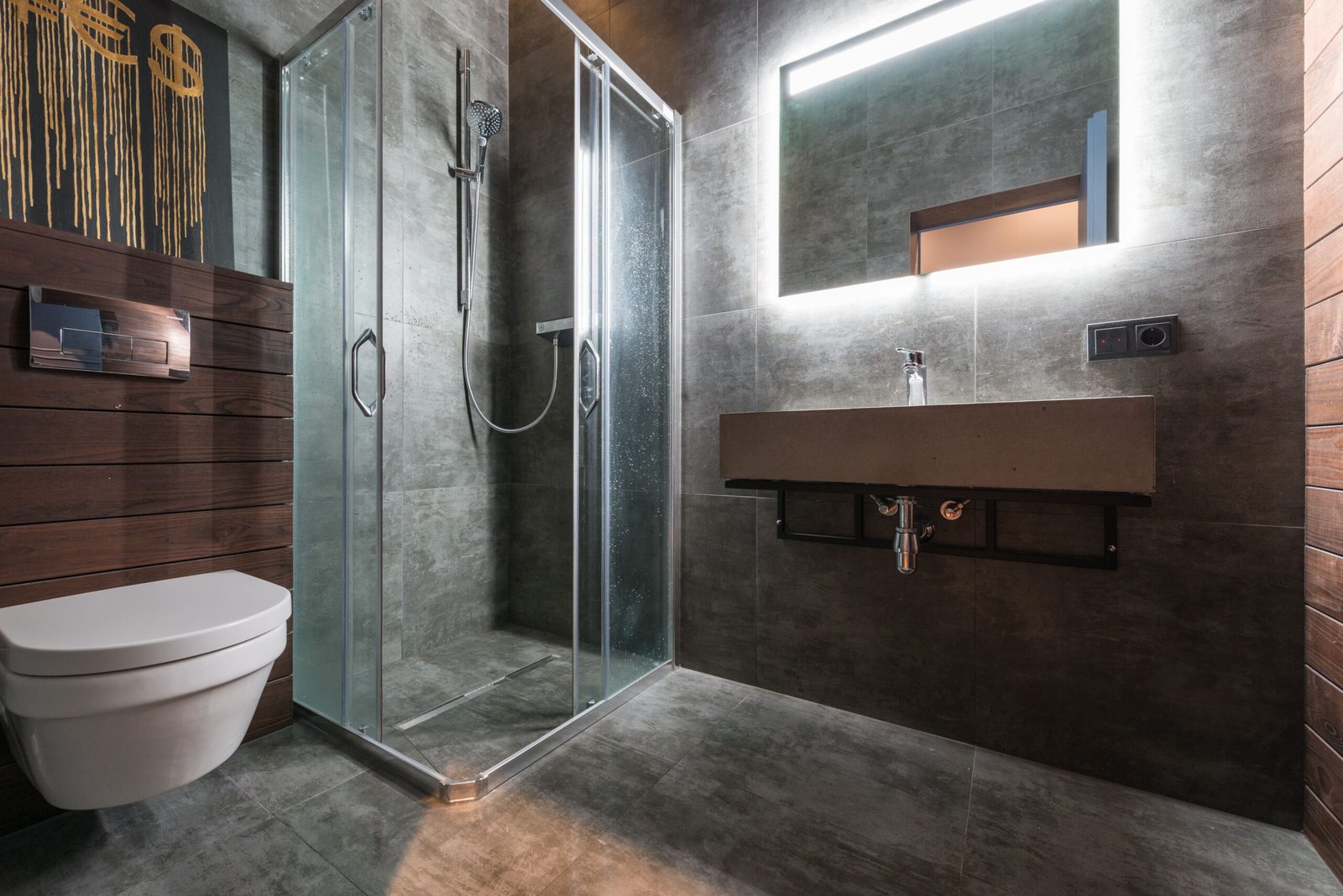
A growing range of solid shower panels is available in finishes such as marble, concrete and natural stone effects, offering different design options without requiring the installation of individual stone or ceramic tiles.
Why Are Solid Panels Becoming Popular?
One of the main attractions of solid shower panels is the reduction in grout lines.
Traditional tiled shower enclosures can contain numerous joints, each requiring suitable grouting and ongoing cleaning. Over time, grout may become discoloured or require maintenance, particularly in frequently used bathrooms.
Large-format panels create a more continuous wall surface, making everyday cleaning easier.
Another advantage is the visual finish. Modern decorative panels can reproduce the appearance of materials such as marble or concrete while offering a more practical alternative for certain refurbishment projects.
For homeowners looking to modernise a bathroom, this can provide an attractive balance between design and functionality.
Installation Considerations for Contractors
Although shower panels can simplify parts of a bathroom installation, correct preparation remains essential.
Before work begins, installers should assess the condition of the existing walls. The substrate must be suitable for the chosen panel system and sufficiently sound, clean, dry and even to support the installation.
Some manufacturers permit panels to be fitted over existing tiles, provided the surface meets their requirements. However, loose tiles, excessive unevenness, moisture damage or unsuitable underlying materials should be addressed before installation.
The chosen adhesive must also be compatible with both the panels and the substrate.
Other important installation considerations include:
- Accurate measurement: Large-format panels should be measured carefully before cutting, particularly around shower valves, pipework and enclosure fittings.
- Joint positioning: Panel joints should be planned to achieve a neat finish and minimise unnecessary cuts.
- Trims and profiles: Suitable internal corners, joining profiles and finishing trims can help create a professional appearance.
- Waterproof detailing: Joints, edges, penetrations and the connection between the wall panels and shower tray must be sealed according to the manufacturer’s instructions.
- Movement allowances: Any expansion gaps or movement requirements specified by the manufacturer must be followed.
It is important to remember that a water-resistant panel surface does not remove the need for proper waterproofing and sealing throughout the shower installation.
Contractors should always follow the manufacturer’s fitting guidance and ensure the overall installation is appropriate for the intended wet-area use.
Are Solid Shower Panels Suitable for Renovation Projects?
Solid shower panels can be particularly useful in refurbishment work where homeowners want to update an existing bathroom without committing to a completely tiled finish.
Depending on the condition of the existing surfaces and the specified installation system, fitting panels may reduce some of the preparation and finishing stages associated with traditional tiling.
This can be attractive for projects involving occupied homes, rental properties and bathroom upgrades where reducing disruption is an important consideration.
However, the overall installation time will still depend on the condition of the existing walls, the complexity of the shower enclosure and any plumbing or waterproofing work required.
For contractors, the most effective approach is to assess each project individually rather than assuming every panel system will be quicker to install.
Comparing Solid Panels with Traditional Tiles
Both materials offer advantages, and the right choice depends on the requirements of the project.
Traditional tiles provide enormous flexibility in size, pattern, texture and layout. They can be particularly suitable for bathrooms requiring intricate designs or unusual wall configurations.
Solid shower panels, meanwhile, provide an alternative for customers who prefer large, uninterrupted surfaces and fewer grout joints.
They may also appeal to clients looking for marble or stone-inspired finishes without the weight, cost or installation requirements of natural stone.
When comparing options, contractors should consider the complete installation rather than material cost alone. Wall preparation, accessories, adhesive, waterproofing, labour and ongoing maintenance all influence the overall value of a bathroom installation.
Choosing the Right Panel System
Not all shower panels are manufactured in the same way.
Panel thickness, core construction, dimensions, surface finish and installation requirements can vary considerably between products.
For example, a lightweight hollow-core panel may be suitable for one type of refurbishment, while a denser solid-core panel may better suit another project’s requirements.
Before specifying a product, installers should check its intended application, technical specifications, compatible adhesives and fitting instructions.
It is also worth considering the availability of matching trims, profiles and other finishing accessories, as these can make a significant difference to the completed installation.
Suppliers offering different types of shower panels