How Do You Pick a Lamp for a Console Table?
Choosing a lamp for a console table involves matching lamp height, shade diameter, and placement to a console table typically measuring 70 to 85 cm tall, while aligning materials, light output, and symmetry with interior design balance principles.
A console table rarely works alone. A correctly chosen lamp controls light distribution, visual height, and focal emphasis across entryways, living rooms, and transitional spaces.
This guide breaks the process into measurable decisions you can apply immediately.
Explore full console table styles here: https://petalwoodinteriors.co.uk/
What is the function of a console table in interior design?
Console table function equals surface display support, spatial anchoring, and transitional storage across entryways and living rooms, typically spanning 90 to 150 cm width and 30 to 40 cm depth.
Console tables act as visual bridges between zones. A hallway console supports keys and lighting, while a sofa console defines seating boundaries.
Lamp selection depends directly on this function. A decorative console requires softer ambient light. A functional console benefits from brighter task-level lighting between 400 and 800 lumens.
Where should a console table be positioned to optimize lamp use?
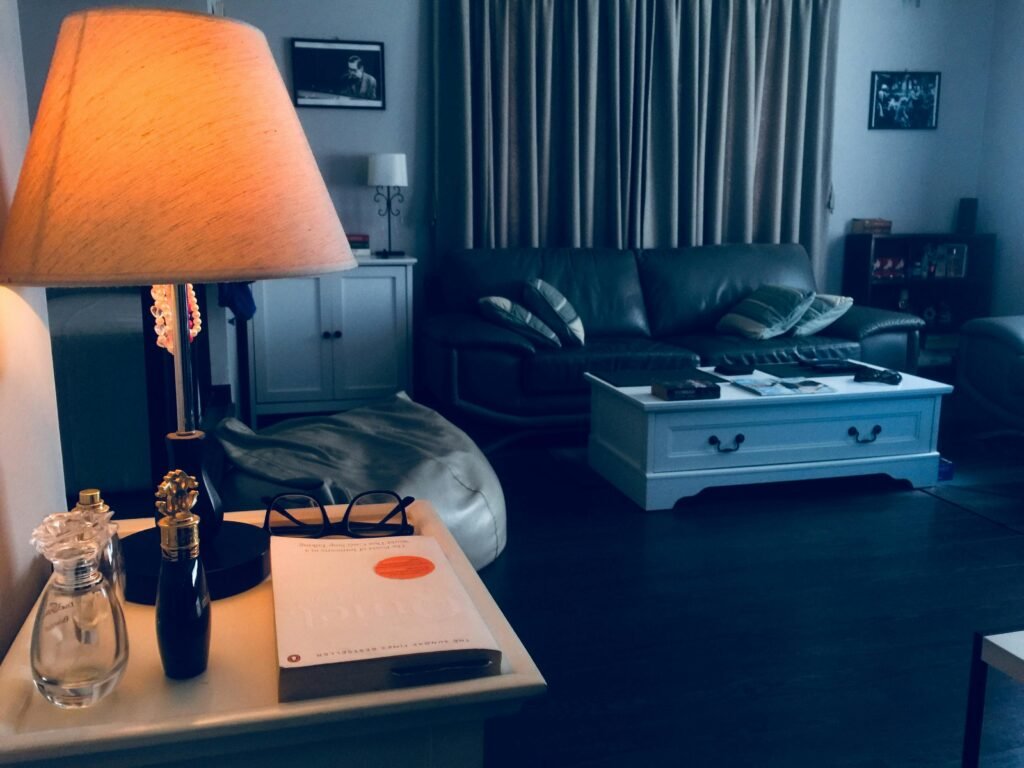
Console table placement determines lamp height, spacing, and light spread, with optimal locations including sofa backs, wall centres, and fireplace flanks, each requiring 10 to 20 cm clearance behind the lamp base.
Behind a sofa, taller lamps between 70 and 90 cm improve overhead glow without glare.
Against a wall, medium lamps between 60 and 75 cm maintain proportion and prevent visual crowding.
Near fireplaces, symmetry improves balance, so paired lamps spaced evenly across the surface create structure.
How large should a lamp be relative to a console table?
Lamp size must scale with console width, with total lamp height ranging from 60 to 100 cm and shade diameter measuring 30 to 50 cm depending on table width between 90 and 150 cm.
Use this proportional framework:
- Console under 90 cm width
Lamp height: 60 to 70 cm
Shade diameter: 30 to 35 cm - Console 90 to 120 cm width
Lamp height: 70 to 80 cm
Shade diameter: 35 to 40 cm - Console 120 to 150 cm width
Lamp height: 80 to 90 cm
Shade diameter: 40 to 45 cm - Console over 150 cm width
Lamp height: 90 to 100 cm
Shade diameter: 45 to 50 cm
A consistent ratio improves visual harmony. Lamp height should equal approximately 1.5 times the console height.
Should a console table use one lamp or two lamps?
Lamp quantity depends on console width and styling intent, with single lamps suited to tables under 100 cm and paired lamps suited to tables over 120 cm for symmetrical balance.
Single lamp layouts create asymmetry. Designers often combine one lamp with stacked books or decorative objects to offset weight.
Dual lamp layouts create bilateral symmetry. Equal spacing from each edge, typically 10 to 15 cm, maintains alignment and prevents overcrowding.
What lamp style works best for a console table?
Lamp style selection depends on material continuity, shape balance, and light diffusion, with common base materials including ceramic, glass, and metal, and shade types including drum and empire forms.
Material pairing improves cohesion:
- Wood console + ceramic lamp creates contrast
- Metal console + glass lamp increases reflectivity
- Painted console + brass lamp adds warmth
Shade selection affects light spread. Drum shades distribute light evenly across 360 degrees. Empire shades direct light downward, creating focused pools.
For reference on lighting principles, review the fundamentals of lighting design.
How bright should a console table lamp be?
Lamp brightness should range between 400 and 800 lumens for ambient lighting, equivalent to 40 to 60 watt incandescent output or 6 to 10 watt LED bulbs.
Lower brightness, around 400 lumens, suits mood lighting in living rooms.
Higher brightness, around 800 lumens, supports functional spaces such as entryways where visibility matters.
Light temperature also matters. Warm white bulbs between 2700K and 3000K produce softer tones, aligning with color temperature standards used in residential interiors.
How should a lamp be positioned on a console table?
Lamp placement requires 10 to 15 cm distance from the wall and proportional spacing relative to other objects, ensuring shadow reduction and balanced composition.
Avoid pushing the lamp fully against the wall. A small gap prevents harsh shadows and protects wall finishes.
Position the lamp slightly off-centre when using a single lamp. Maintain equal spacing when using two lamps.
Eye-level alignment also matters. The bottom of the lampshade should sit near seated eye height, typically 120 to 140 cm from the floor.
A Simple Decision Framework for Console Table Lamps
Use this checklist to simplify selection:
- Measure console width and height
- Select lamp height at 1.5 times console height
- Choose shade diameter at 30 to 50 percent of console width
- Decide between one or two lamps based on width threshold of 100 to 120 cm
- Match material to existing finishes
- Set brightness between 400 and 800 lumens
- Position lamp 10 to 15 cm from wall
This framework removes guesswork and ensures consistent results across different room layouts.
Common Mistakes When Choosing Console Table Lamps
Undersized lamps create imbalance. A 50 cm lamp on a 150 cm console lacks visual weight.
Oversized shades block sightlines. A shade wider than 50 cm often overwhelms narrow tables.
Incorrect brightness causes discomfort. Bulbs above 1000 lumens can produce glare in small spaces.
Ignoring spacing leads to clutter. Objects placed within 5 cm of the lamp base reduce visual clarity.
Final Thought
A console table lamp controls more than lighting. A correctly sized and positioned lamp defines proportion, guides attention, and stabilizes the entire styling composition.
The best choice follows measurable rules first, then personal taste.